
The starting point
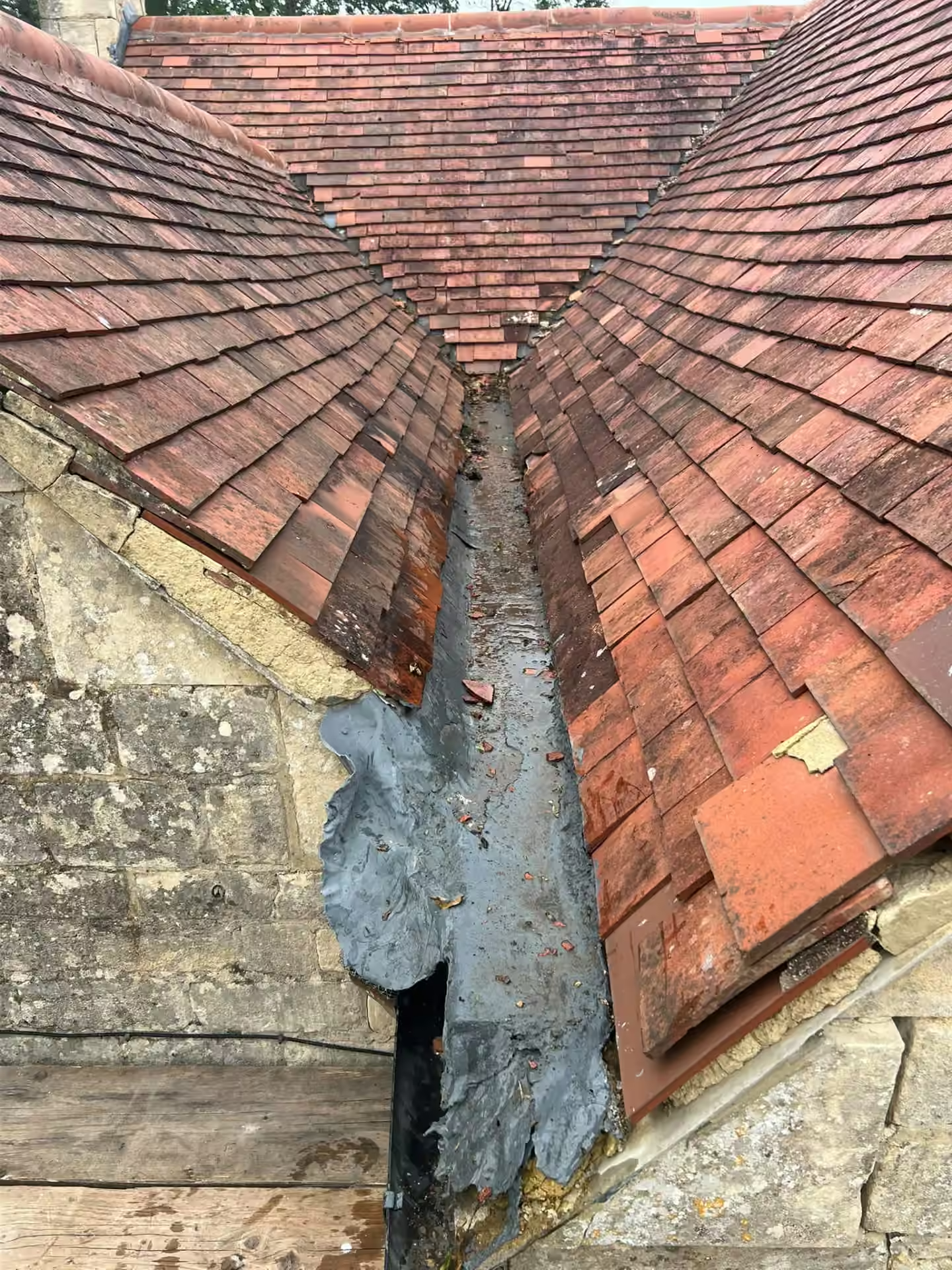
The original view shows a narrow channel between tiled roof slopes, with leaves, debris and tile fragments lying in the valley. The lining looks uneven and heavily weathered, and several tile edges beside it are damaged or irregular. Valleys bring together rainwater from more than one roof slope, so the condition of this relatively small area matters to the roof as a whole.
What was required
The aim was to bring a clear, defined channel back between the adjoining roofs and make the surrounding tile edges tidy. The outlet at the lower end and the meeting point beneath the rear slope both needed to form part of the finished detail. A valley is not just a strip of material: it has to work with the shape and edges of every slope feeding into it.
Work completed
- Old valley detail replaced with a formed lead-lined channel
- Visible debris removed from the valley
- Lead dressed into the sides and lower outlet
- Tiled edges finished neatly alongside the renewed lining
- Junction completed beneath the rear tiled slope
Materials used
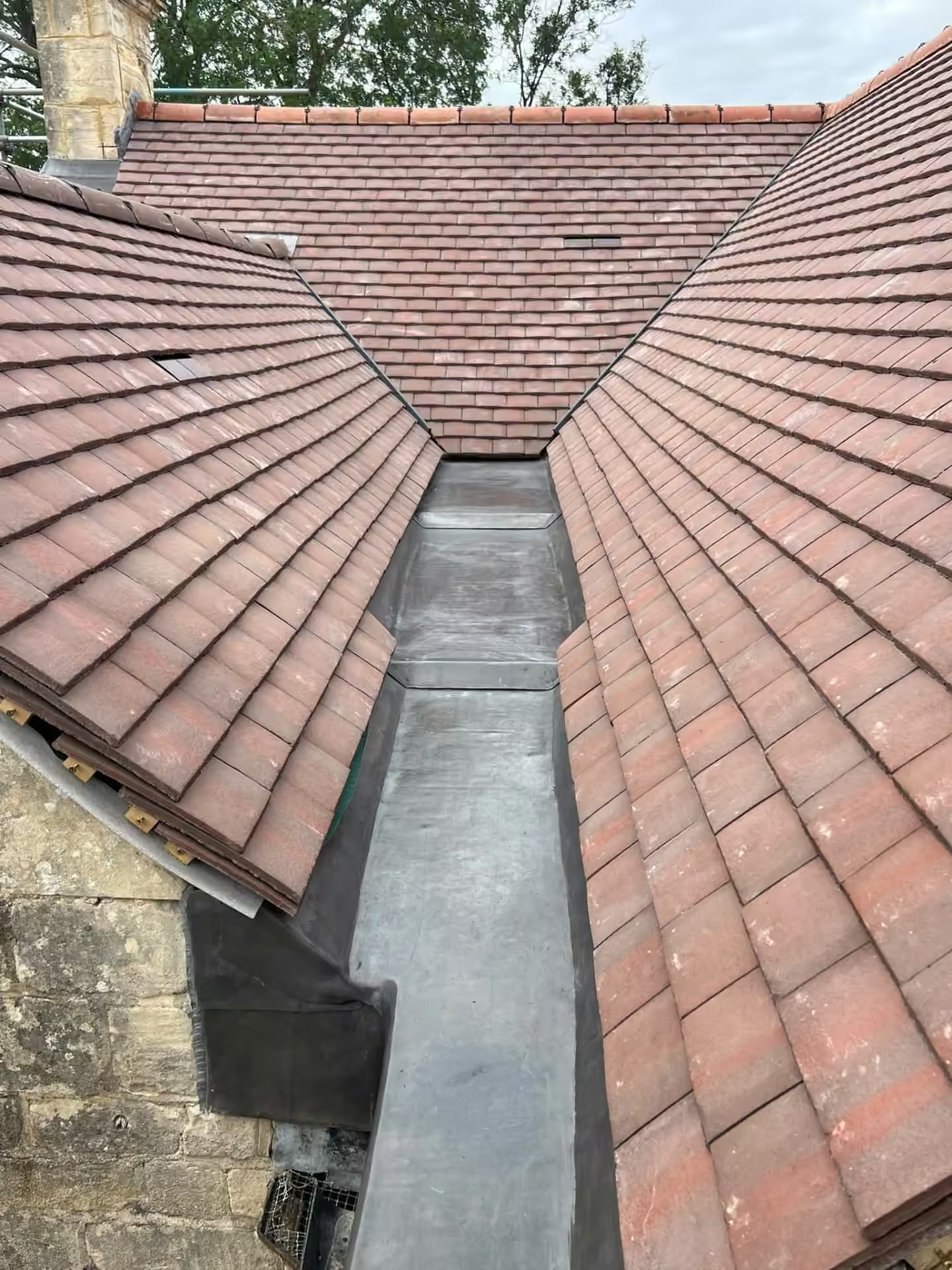
The finished image shows formed lead lining, red roof tiles and ridge tiles, with the existing stonework retained. Overlapping sections are visible along the lead channel.
The result
The after photograph shows a clearly defined lead valley with a clean channel and orderly tile edges. Compared with the original view, the rough, debris-filled junction has a much more deliberate finish. The surrounding red tiled roof and stone walls keep their familiar appearance while the valley detail is renewed.
In conclusion
Not every roofing project is about replacing an entire roof. This job shows how a focused renewal at a busy roof junction can make a substantial visible improvement without changing the character of the building.