
The starting point
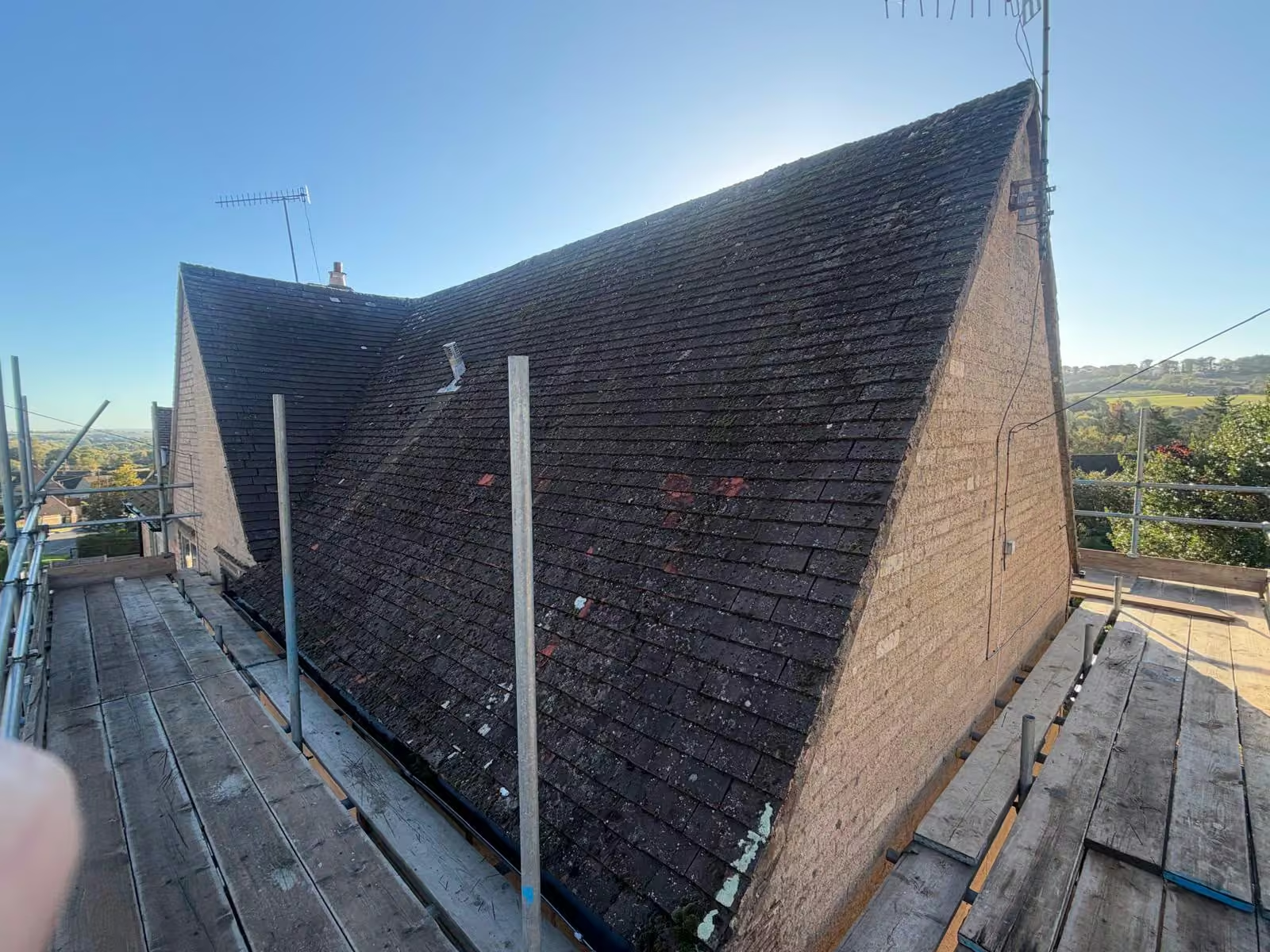
The original photograph shows a steep roof with a dark, weathered covering, patches of surface growth and an uneven appearance across the slopes. The stone gables and the change in direction between the roof sections are important parts of the building's character. This was not a simple rectangular slope: the meeting point between the two roof sections needed just as much attention as the broad areas of covering.
What was required
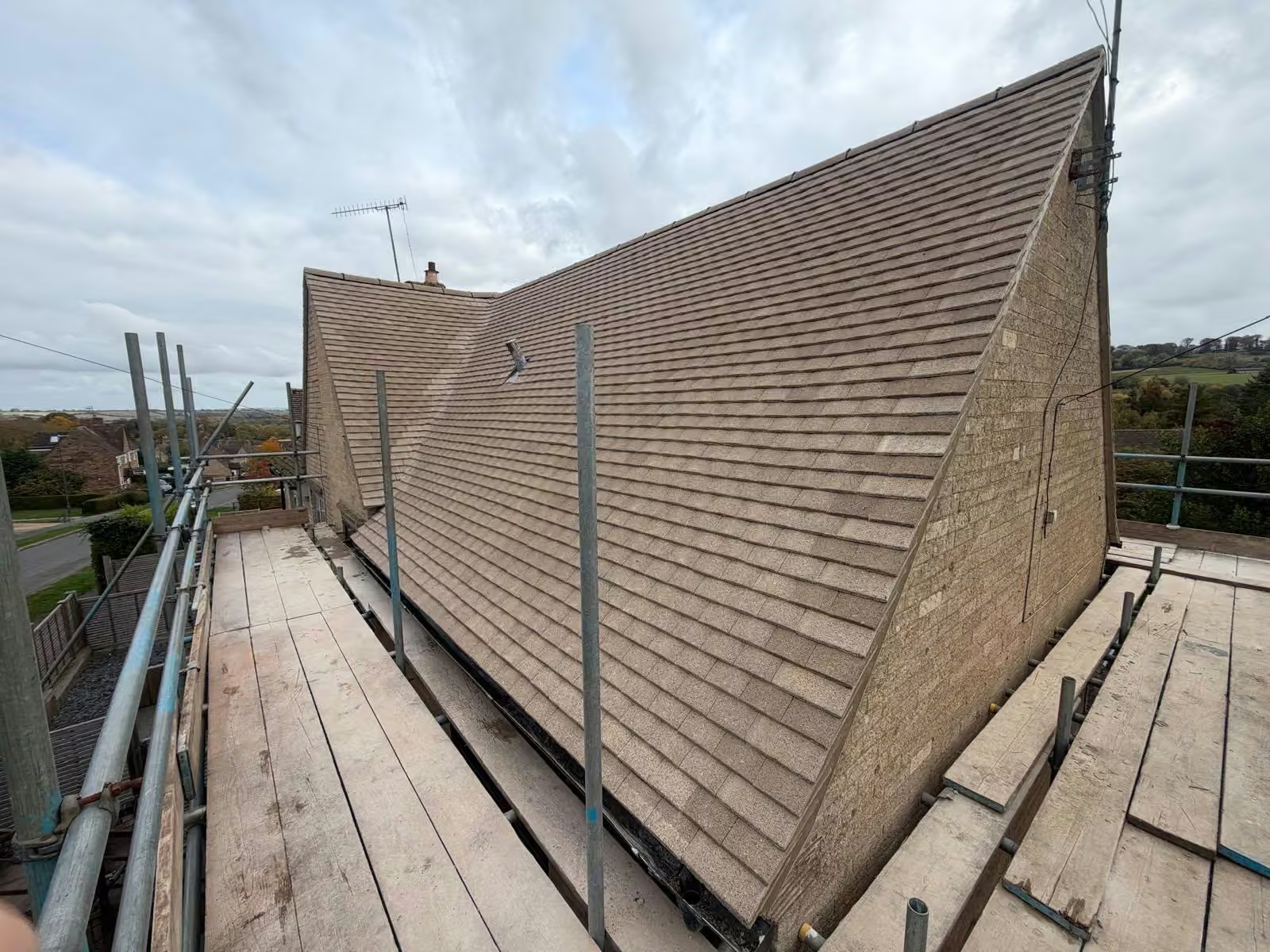
The renewal needed to follow the existing roof shape while bringing a consistent finish to both visible slopes. On a steep roof like this, the alignment of each course is particularly noticeable from ground level. The edges against the stone gables, the junction between the slopes and the detail around the projecting pipe all needed to sit neatly within the finished covering.
Work completed
- Renewed covering across the two visible roof slopes
- Consistent horizontal courses following the original roof shape
- Neatly finished edges alongside the stone gables
- Roof covering fitted around the existing projecting pipe
- A continuous finish through the junction between the slopes
Materials used
The finished photograph shows a light, stone-toned roof covering alongside the existing stone gables. Its colour gives the roof a much closer visual relationship with the walls. The exact product and specification are not identified in the photographs.
The result
The difference is clear in the paired photographs: a dark, uneven-looking surface has become a lighter roof with straight, consistent courses. The original steep profile remains, and the stone gables still frame the roof. Scaffolding is visible in both photographs, showing the roof at the working stage rather than a fully cleared site.
In conclusion
A roof renewal does not have to change the character of a property. Here, the visible improvement comes from an even covering, a colour that works with the stone and careful attention to the shape already there.